Salesforce consultancy for SMEs, from setup to running it yourself
CRM Force is a Salesforce consultancy for small and mid-sized businesses: we set up Salesforce, clean up orgs that have grown messy, connect Salesforce to your other systems and teach your team to run it. Pascal van de Braak is your single point of contact, backed by a steady group of specialists.
- One point of contact
- Your team learns to run Salesforce
- Start with the free Salesforce scan

Salesforce consultancy at a glance
Updated on
- What it is
- Advice and hands-on work in Salesforce: setting up Salesforce, cleaning up and managing an existing org, connecting Salesforce to your other systems and training your team.
- Who it's for
- SMEs that use Salesforce or are about to, and want it to keep fitting the way they work.
- What it costs
- After the intro call you get an estimate for each assignment. For a new implementation, you can work out the price yourself up front.
- Who you talk to
- Pascal van de Braak, your single point of contact, backed by a steady group of specialists.
- First step
- An intro call, or the free Salesforce scan first if you want to know where you stand.
Do any of these sound familiar?
- Your Salesforce org has grown over the years and nobody knows exactly what's running in it anymore.
- There are automations in Salesforce that nobody is sure are still needed.
- Every small change depends on someone from outside.
- You want your own admins to learn to maintain Salesforce themselves.
How a project with CRM Force runs
CRM Force only starts building once it's clear what's already there and what comes first.
1. Intro call
You explain how you work and where Salesforce gets in the way. Pascal van de Braak then tells you what he would tackle. If a custom-built CRM fits better than Salesforce, you'll hear that too.
2. Mapping the org
We pull up what's running in your Salesforce org: objects, fields, automations and permissions. Then you can see what's duplicated and what can go.
3. Deciding what comes first
Together we put the jobs in order, each with an estimate up front.
4. Building
We build in small steps, with Flow where possible and Apex where needed. During a cleanup, each automation gets a written note of what comes out, what stays and why.
5. Your team takes over
Your admins and key users learn to read and adjust the org themselves.
Staff Capital: getting a grip on a Salesforce org that grew over the years
At Staff Capital, a Dutch payroll and staffing company, CRM Force is mapping the Salesforce org that runs on the Mysolution package, reducing its complexity and training the internal team through the training platform. One object had seven automations; the plan brings that down to two.
Read the Staff Capital customer story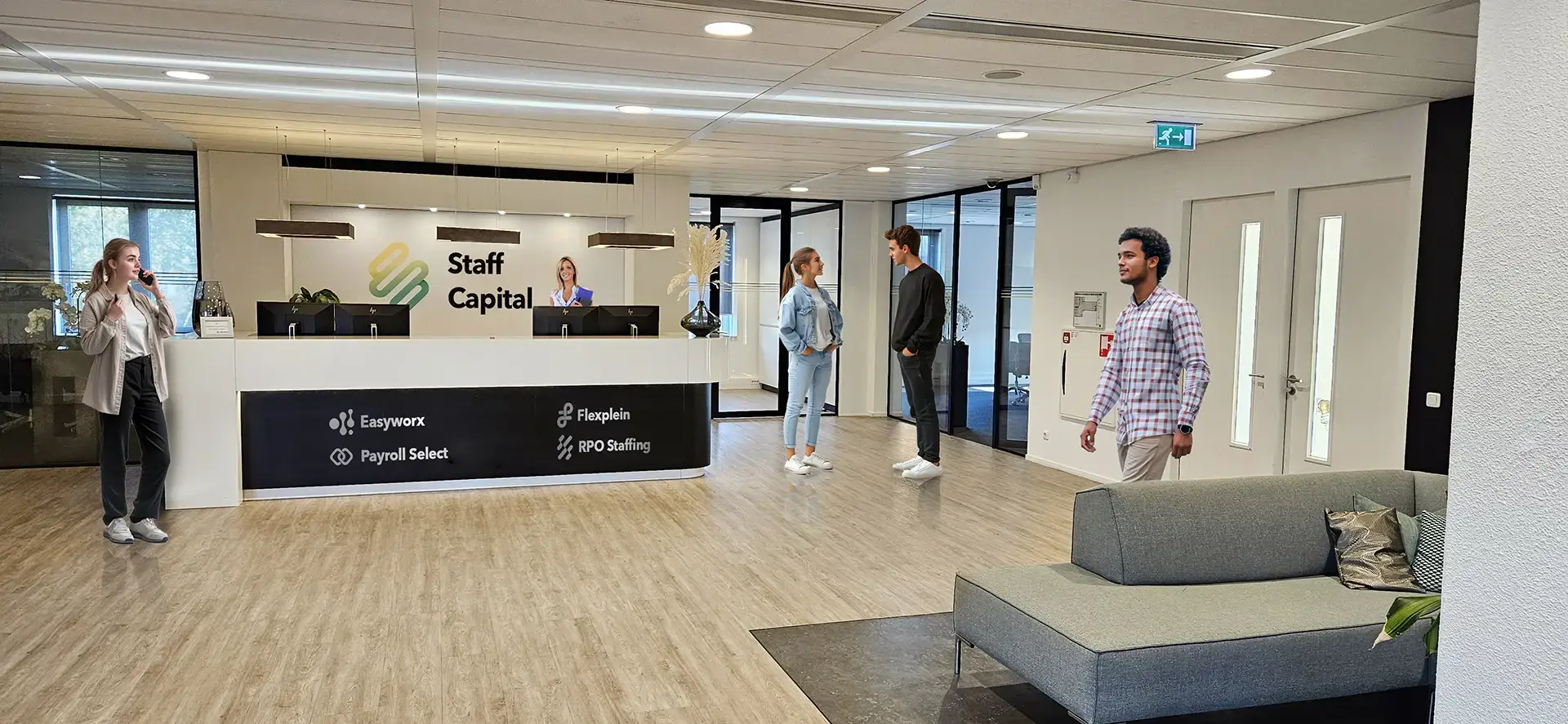
What does Salesforce consultancy cost?
CRM Force estimates Salesforce consultancy per assignment. After the intro call you know what a job involves and what it costs, before any work starts. The size of a job mostly depends on four things:
- how much is already in your Salesforce org, and how well it's documented;
- how many systems need to be connected;
- how quickly decisions get made in your company;
- how much your own team wants to take over afterwards.
For a new Sales Cloud or Service Cloud implementation, you can work out the price yourself on the Salesforce implementation page. The Salesforce scan is free. Licenses are paid separately to Salesforce, per user per month.
Buyer's guide: choosing a Salesforce consultant
A free guide with questions and criteria for choosing a Salesforce consultant or partner. We email it to you as a PDF; the guide is in Dutch.
Frequently asked questions about Salesforce consultancy
What's the difference between Salesforce consultancy and hiring a consultant?
With consultancy, CRM Force takes on a whole project, from the decisions to delivery. When you hire a Salesforce consultant, you buy in knowledge and time and stay in charge yourself. You choose what fits in the intro call.
Do you work with small businesses too?
Yes. CRM Force works with SMEs, including teams with only a handful of Salesforce users. With a small team we first discuss whether Salesforce is the right choice.
Can you take over an existing Salesforce org?
Yes. CRM Force starts by mapping what's there, even if the previous partner documented very little. After that you know what stays, what can go and what comes first.
Should I choose Salesforce or a custom-built CRM?
That depends on your organization, not on how much data you have. Salesforce fits if you have people in-house who want to manage it, face requirements from outside, need heavy standard features or already use it. CRM Force sets up Salesforce and builds custom CRMs; the trade-off is explained on Salesforce or your own CRM.
What happens in the free Salesforce scan?
In the free Salesforce scan, you share your screen in a video call and CRM Force looks at your Salesforce org with you. You hear what to tackle first.
Book an intro call
Tell us in a few lines where you stand with Salesforce and what you want to achieve. Pascal van de Braak will get in touch to schedule a time.
What does a Salesforce consultant do?
A Salesforce consultant translates how your business works into the setup of Salesforce: which data you record, who can see what, which steps run automatically and which reports you need. The consultant then builds that in Salesforce, using standard features where possible and Flow or Apex where needed.
At CRM Force you talk to the Salesforce consultant directly. Pascal van de Braak is your single point of contact and makes the decisions with you, backed by a steady group of specialists who help build.
Hiring a Salesforce consultant for a single job
Hiring a Salesforce consultant makes sense when you want to stay in charge and need extra knowledge or hands for a while: an integration that's stuck, a process that needs redoing, or an admin who is out for some time. CRM Force then works inside your own Salesforce org and follows your schedule.
When you hire a Salesforce consultant, agree up front on what will be in place at the end of the job, where changes get documented and who manages the org afterwards. That way your own team or the next consultant can carry on without guessing.
How much does a Salesforce consultant cost?
What a Salesforce consultant costs depends on experience, the way you work together and the number of hours a job takes. So compare the total cost of the job and the people working on it, more than the hourly rate. A lower rate with more hours can end up costing more.
CRM Force works with one experienced functional consultant per project and only brings in a second when the work calls for it. For each job you get an estimate of the total up front. For a new Salesforce implementation, you can work out the price yourself in the calculator.
Consultancy, a freelance consultant or training your own team?
The choice depends on who will be in charge of Salesforce later: CRM Force, you, or your own admins.
| Route | Fits when | Who's in charge |
|---|---|---|
| Consultancy | You want to outsource a whole project, from decisions to delivery | CRM Force, in consultation with you |
| Hiring a consultant | You need knowledge or capacity for a while | You |
| Training your own team | You have admins or key users who want to learn | Your own team, with help when they get stuck |
You can also combine them: CRM Force lays the foundation in Salesforce and your own team takes over step by step through the training platform for admins and key users, with help from an expert when they get stuck.
Cleaning up a messy Salesforce org
You make a Salesforce org that has grown over the years manageable again by first pulling up what's running and only then removing anything. CRM Force looks at the automations, fields and permissions, and records for each part whether it stays, merges with something else or goes.
CRM Force switches old automations off first and only deletes them later, so there's a way back if something still depended on them. If you want someone to keep the org in shape afterwards, read more about Salesforce optimization and functional management.
Connecting Salesforce to your website and other systems
CRM Force connects Salesforce to your website and other systems, so data flows into it on its own. At Lease-e and LeaseKlik, requests from the website end up with the right lead or opportunity, and events from Salesforce go back to Google Analytics, so marketing can see which campaigns lead to a contract.
What a Salesforce integration takes depends on what the other system allows, how well it's documented and how clean the data is on both sides. That's why CRM Force estimates every integration separately. Read more under Salesforce integrations and data integration.
Updated on